
Artificial intelligence can generate meal plans in seconds. But for a group of St. Bonaventure University students, living with those plans for an entire week revealed something the technology could not account for: the complicated realities of grocery shopping, tight budgets and human food preferences.
During the fall semester, students in a nutrition course taught by Dr. Jeffrey Allen used artificial intelligence to create seven-day meal plans designed for low-income families dealing with chronic health conditions. Then came the challenge: students had to follow those AI-generated plans themselves for an entire week.
The experience pushed students to consider a growing question as artificial intelligence becomes more common in healthcare and everyday life — how much people should trust the recommendations produced by AI.
The project brought together students and faculty from three academic areas at St. Bonaventure: the School of Health Professions, the Jandoli School of Communication and the School of Arts and Sciences. The collaboration combined nutrition science, video storytelling and ethical discussion to explore how artificial intelligence might influence real-world health decisions.
A classroom experiment
Students in HS 309: Nutrition, taught by Allen, were responsible for creating the AI-generated meal plans. At the same time, students in JMC 343: Field Production, taught by senior multimedia producer Danny Bush, documented the entire project as part of a semester-long documentary.
Philosophy professor Dr. Heather McDivitt also contributed to the course by helping students think through the ethical questions surrounding artificial intelligence.
Before the project began, McDivitt asked students to consider the different factors that influence food choices.
“People choose food for many reasons,” McDivitt said. “Sometimes it’s cost. Sometimes it’s health. Sometimes it’s cultural traditions.”
Allen said the assignment was designed to make those considerations more tangible for students.
“The first part of the project was creating a paper using AI to generate a seven-day meal plan,” Allen said. “The students had to include all nutritional information per serving, the cost, a full grocery list and recipes for every single meal.”
Testing AI in the real world
Once the plans were complete, the project took an unexpected turn.
Instead of following their own meal plans, each group was assigned another group’s plan and asked to live with it for an entire week.
“When I realized we were going to follow someone else’s meal plan for a whole week, it felt a little overwhelming,” said Riley Hacic, a student in the class.
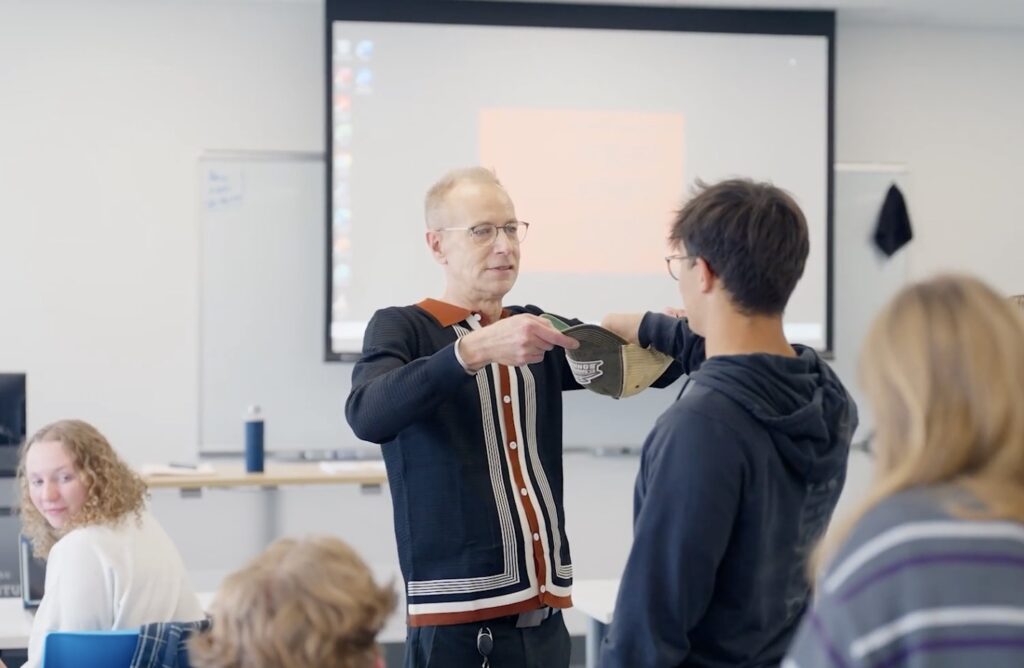
Elise Brooks said the moment the assignment became real came when students drew meal plans at random.
“I knew something was up when we had to go up and pick from the hat,” Brooks said. “It took a while for us to realize we were actually making this food and actually eating it.”
Students were given a strict $200 budget to feed a four-person household for a week, forcing them to plan meals carefully and consider food costs.
The grocery store reality check
The grocery store quickly became the first major test of the AI-generated plans.
Students discovered that some ingredients were unavailable, some prices were inaccurate and some items were missing from the grocery lists altogether.
“When they went to the grocery store, they discovered that many of the prices were wrong,” Allen said. “Some items were missing from the grocery list. In several recipes, the directions were incomplete.”
Students often had to improvise, and even noticed that certain ingredients had not been included in the lists at all.
“As we went through our shopping list, we realized we didn’t have bread for toast or yogurt for a yogurt bowl,” said Brecken Riley. “So we had to go back and fix the list.”
Those challenges highlighted how easily errors produced by artificial intelligence could affect real-world planning.
Lessons about food insecurity
The project also helped students better understand the financial limitations many families face when buying groceries.
“One of the major lessons outside of the AI component was understanding what it’s like to live with a limited income and an absolute spending ceiling,” Allen said.
He explained that families using government assistance programs often face difficult situations when grocery costs exceed their available funds.
“If you were using an EBT card to access SNAP benefits and you only had $200, once you hit that limit you can’t pay for the rest of the groceries,” Allen said.
For many students, the experience reshaped how they thought about food access.
“I thought $200 would go a lot further, but it was extremely tight,” said health sciences major Olvia Reeves. “Produce and protein are expensive.”
Health sciences major Gabby DaSilva, who is an international student from Brazil, said the project challenged assumptions about food insecurity in the United States.
“Where I’m from, there’s a misconception that people in the United States don’t go hungry because it’s a wealthy country,” DaSilva said. “Learning that food insecurity is actually common here was very eye-opening.”
Cooking, improvising and learning
Preparing the meals revealed another layer of challenges.
Some recipes lacked clear instructions, while others required kitchen tools students did not have available.
“I didn’t have a can opener,” said Tori Tribunella, who lives off campus. “So I walked these cans of tuna over to another building to ask someone to open them.”
Students also realized that meals that looked appealing in a written plan did not always turn out well in practice.
“I mean, it looks like really fancy food on the paper,” said Breanna Murphy. “But in reality it looks terrible. It’s not very appetizing.”
Other students were surprised by unfamiliar ingredients.
“Ricotta pear toast for breakfast?” said Public Health major Ryan Karp. “I’ve never heard of that in my life.”
Despite the challenges, the experience helped build connections among students.
“Honestly, it’s fun getting together like this,” said Karp. “Even though I hate what we’re eating, it’s a great team-building exercise. This is way better than a PowerPoint presentation”
Audio: The ethical questions behind AI-generated nutrition advice
The ethics of artificial intelligence
Beyond the grocery trips and cooking challenges, the course encouraged students to think more critically about artificial intelligence and its role in healthcare.
McDivitt said one of the biggest concerns surrounding AI is the assumption that its recommendations are always neutral.
“AI systems are trained on human data,” she said. “So if there are biases or gaps in that data, those issues can show up in the recommendations.”
Her goal in the course was to help students learn to question technology rather than blindly accept its answers.
“Technology should never replace thoughtful human judgment,” McDivitt said.
What the experiment revealed
Allen said the assignment ultimately helped students recognize both the strengths and weaknesses of artificial intelligence.
“AI is fallible,” Allen said. “Someone has to check that the recommendations make sense, that the food is palatable and that people would actually eat it.”
By the end of the project, students said the experience changed how they think about nutrition advice and healthcare recommendations.
“You have to put yourself in the shoes of the people you’re trying to help,” said Karp. “Recommendations need to be practical for their everyday lives.”
Artificial intelligence may continue to play a growing role in healthcare and nutrition counseling. But the St. Bonaventure experiment showed that understanding how those recommendations work in real life still requires something technology cannot replicate.
Human experience.